BREAKING- Alligator Alcatraz Is Losing Track Of People And Deporting Them By Mistake
By Nick Valencia | January 20, 2026
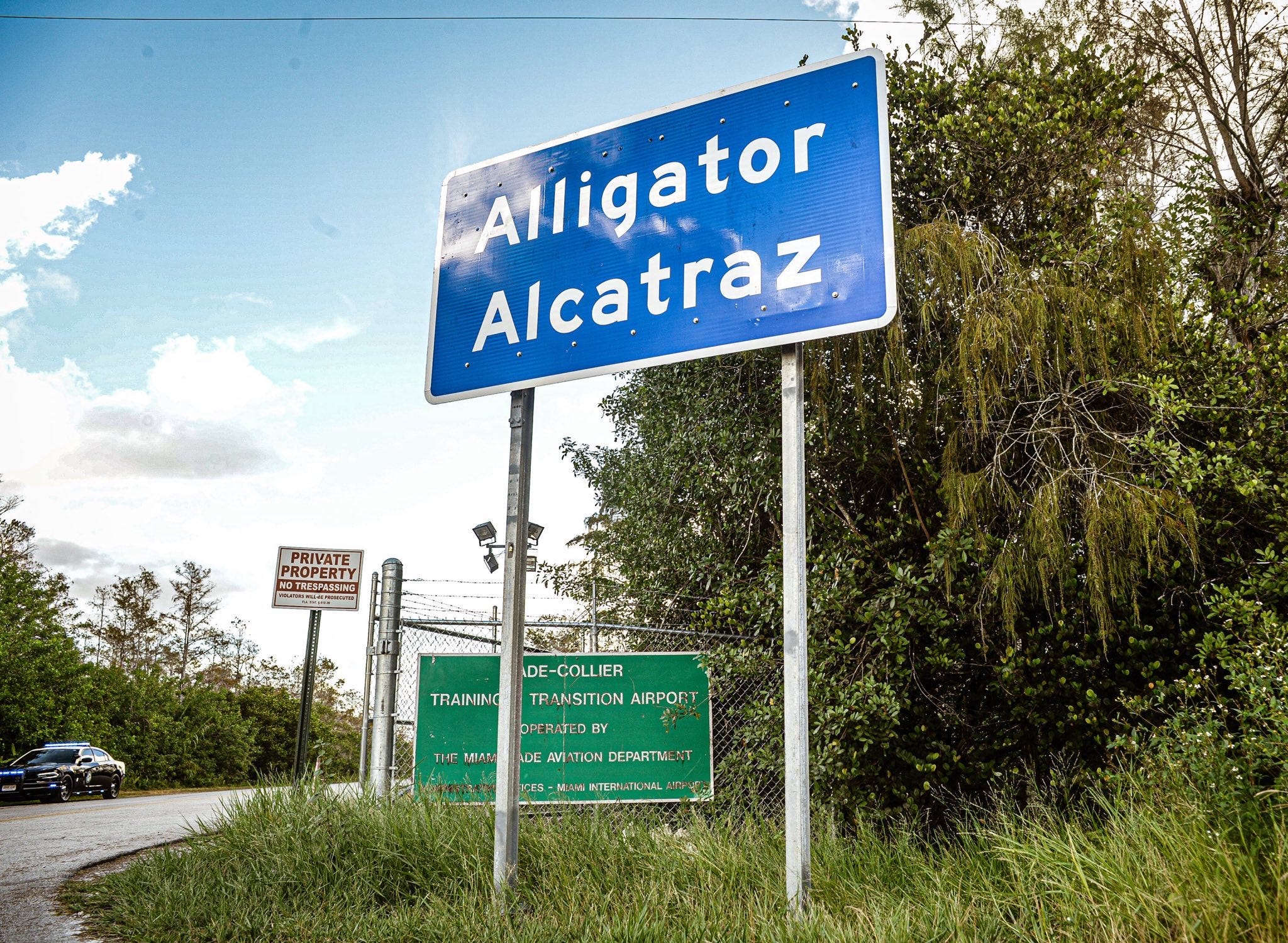
COLLIER COUNTY, FLORIDA — At least two people held at the facility known as Alligator Alcatraz were either transferred out of state to the wrong facility or mistakenly deported, according to a source with intimate knowledge of the facility’s operations.
“They never kept a record of any detainee. They were just throwing papers together and losing track,” the source said.
The source spoke to NVN on condition of anonymity for fear of legal retaliation after signing a non-disclosure agreement. They described Alligator Alcatraz as a detention operation plagued by dysfunction so severe that even the most basic safeguards meant to prevent catastrophic error are routinely ignored. As a direct result of the poor record keeping, people are being mistakenly transferred out of state, sent to the wrong facility, or worse, mistakenly deported.
How Could This Happen?
According to the source, instead of relying on birth dates or federal alien numbers (A-numbers) to track those held, the facility has relied primarily on last names to identify detainees. It’s an approach that virtually guarantees dangerous mistakes in a population where many people share multiple surnames.
In at least one case, a detainee was misidentified as another person with the same two last names and deported as a result, the source said
“They’ve happened repeatedly. Over and over again,” the source said of mistaken deportations.
When asked specifically how many times it’s happened, the source said it was hard to tell because of such poor record keeping. When asked how identities were tracked at the facility, the source explained there was effectively no system to speak of.
Mistaken Releases, Mistaken Transfers, Mistaken Deportations
In August 2025, the dysfunction became unmanageable during a period of mass releases, according to two sources with knowledge of operations at Alligator Alcatraz.
That month, there were more than 2,800 releases. For context, 500-1,000 releases was considered a high for previous months.
According to the source, releases are defined to include both deportations and transfers to other facilities. During this high volume period, the disorganization directly resulted in people being released or transferred in error.
“They had released the wrong detainee… some people were mistakenly deported,” the source said.
In another case, the source said, a detainee was transferred to the wrong destination.
“He was supposed to go to Arizona but they released him out somewhere else,” the source said.
“They weren’t using birth dates. They weren’t using A-numbers. They were going by last name,” the source said. “You can have 40 Sanchez Gonzalez,” the source said. “You have to go by date of birth and alien number.”
Only after repeated mistakes did leadership see the system as particularly dangerous and began implementing stricter verification protocols, the source said.
A Massive Data Breach—and Punishment for Speaking Up
Beyond the system failures, detainee mix-ups, and wrongful deportations, multiple sources described a workplace culture marked by abuse and racism at Alligator Alcatraz.
“[The supervisor] allowed their officers to call some of the detainees niggers in front of them,” one source said, describing the mistreatment of Black Latinos and Haitians.“That’s just acceptable, because they’re detainees. And that was never addressed.”
The language was treated as normal, the source said. And the slur was used not only against detainees.
“It’s also used on Black employees,” the source said.
The past several months at Alligator Alcatraz have also been consumed by fallout from a major cybersecurity breach.
According to a source with knowledge of the incident, a system created by Bill Alley, the head of the facility’s primary contractor Critical Response Strategies (CRS), stored employees’ personal data and was accessible through a CRS web portal.
That system was compromised.
“Everybody’s Social Security, everybody’s ID, was accessible,” the source said.
The exposure lasted for “at least a month” and affected “thousands of employees across multiple contractors,” according to the source.
When one individual raised concerns about the breach, the source said, leadership responded not by notifying employees, but by targeting the whistleblower.
“They reprimanded him,” the source said. “Now they’re trying to demote him.”
No notification letters were sent to affected employees, the source said, and no credit monitoring was offered.
Nick Valencia News reached out to Bill Alley, the head of Critical Response Strategies (CRS), seeking comment and a response to the claims made by multiple whistleblowers cited in this report. Mr. Alley was given 48 hours to respond. No response was received by publication time.
Alligator Alcatraz is not failing because it lacks rules, technology, or authority. It is failing because it exercises immense power without knowing who it is holding, or what happens to people once they leave its custody. In that kind of system, disappearance isn’t a bug; it’s an outcome.


Thank you for keeping this concentration camp in the news. Is there any word on how they're moving people in and out so covertly? Under the cover of the built-in runway?
https://open.substack.com/pub/mbmatthews/p/one-way-in-one-way-out?utm_source=share&utm_medium=android&r=hcg5