


By Nick Valencia | March 2, 2026
CHARLOTTE, NORTH CAROLINA— Luis Duque Betancourt and his partner, Oscar Castillo were doing what they did every morning, when they got in the car Wednesday on their ride together to work.
It’s part of their morning routine. First, Luis drops off Oscar, then he heads to his own job. Five to 10 minutes into their commute, Oscar had barely merged onto the highway when they saw the lights.
“Charlotte’s Web,” the multi-agency immigration sweep that flooded North Carolina’s largest city with federal agents, is officially over. The headlines moved on. The press releases stopped. The national media attention dimmed, and so did the blue lights.
“We just saw blue lights and automatically assumed, you know, cop,” Luis told me. “So we pulled over.”
Within seconds, he says, their car was boxed in.
“Maybe like 10 ICE officers jumped out of the cars, surrounded my vehicle, went to each one of our windows.”
The agents told them they were looking for a vehicle matching the same description as Luis’s white Toyota Camry. They needed to identify the driver.

Luis, a U.S. citizen, had only a photo of his ID on his phone. Oscar had no documentation on him. He gave his name and date of birth.
“They were not looking for him explicitly,” Luis said. “The pretense of them saying they were looking for somebody with the same car description as this one also didn’t make any sense.”
Within moments, Oscar was ordered out of the vehicle and detained.
Charlotte’s Web may have ended. The fear did not.
The scene Luis describes is not unfamiliar to those with stories of loved ones in detention: an early-morning stop, multiple unmarked vehicles, taken into custody on the way to work.
“It sounds like you think you were racially profiled,” I told him.
“I don’t want to just point fingers and assume the worst,” Luis said, pausing. “But unfortunately, like, I do think that that was the case… The fact that they saw that we were both Latino and proceeded to ask for our legal status… that’s scary.”
Proud To Be An American
Oscar came to the United States when he was 2-years-old. He has lived here roughly 24 years. According to Luis, he has had an immigration application pending since 2017 through his sister. He works for a landscaping company in Charlotte and has for nearly eight years.
“He’s doing it the quote-unquote right way,” Luis said. “So to me, the fact that you’re considering a two-year-old at the time a criminal… is insane.”
His family is from Acapulco, Mexico. His mother remains in North Carolina but is too afraid to leave the house, Luis says. She does not speak English.
“He deserves to be in this country because he is an American,” Luis told me. “The only thing that doesn’t make him an American is that he wasn’t born here.”
He paused.
“The amount of support that I received from people… has been overwhelmingly amazing… If that doesn’t scream American, I don’t know what does.”
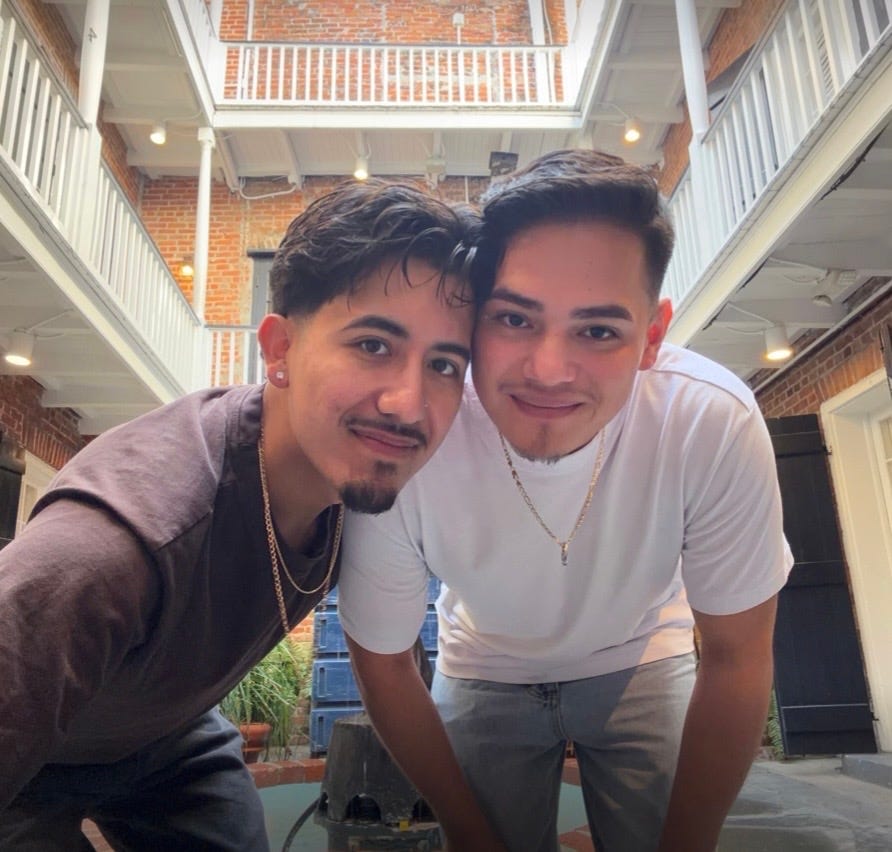
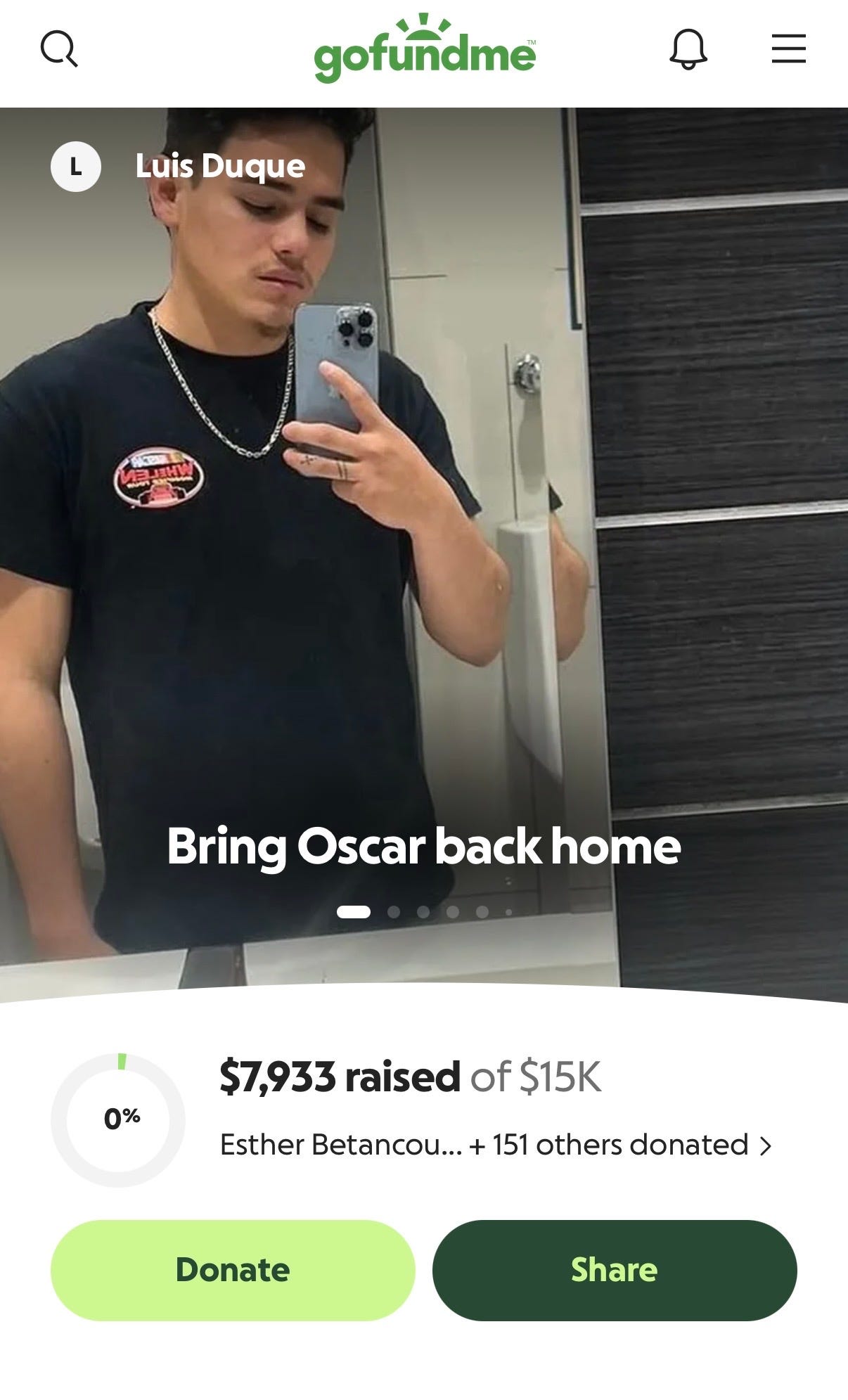
In the days since Oscar’s detention, Luis has been raising money for legal fees and consulting with attorneys. Oscar has a court date scheduled for March 9. They are seeking a bond hearing.
“There’s no reason for him to be detained over there,” Luis said. “He can do this stuff here in Charlotte. He’s not a risk of flight. He’s not a criminal.”
Oscar does not have an order of deportation, Luis says. No criminal record. No outstanding warrant.
“He doesn’t have anything to justify why he should be held in that detention center right now.”
And yet, he is.
What Happens After the Stop
Oscar was first held in a Charlotte-area facility before being transferred to the Stewart Detention Center in Georgia. It is one of the largest immigration detention centers in the country.
Transfers like this are common. They also make it harder for families to track loved ones, find counsel, and organize bond.
Luis says Oscar has yet to see a doctor.
Oscar was in a car accident earlier this year and has been receiving treatment for back pain. More concerning, Luis says, is a heart condition that causes fluid buildup.
“He’s been mentioning… that he’s been getting a lot of pain… more so like his heart condition,” Luis said.
Oscar was detained Wednesday. By Monday, he had still not been evaluated by a physician, according to Luis.
“It’s Monday, and he got detained on Wednesday, and he’s yet to see a doctor.”
Luis is quick to say Oscar may not be in immediate crisis. But he worries about the others.
“There are people in there who do not speak any English… who can’t even explain to these people how they feel, what they need.”
He says Oscar has become an informal translator inside the facility, helping other detainees communicate with officers and medical staff.
“If somebody needs medication… they’ll go up to the person, try to give them the medication, try to communicate with them. The person doesn’t understand them. They don’t care. They move on to the next.”
ICE has previously stated that it provides necessary medical care to individuals in custody. Conversations we have had directly with detainees across the country have proven otherwise.
“Yes, cruelty is the point,” Luis said when asked if he thought the statement was accurate. “These people aren’t detaining the right people… I am all for a safe America… but when you’re targeting people just based off of their race, it’s insane.”
During Charlotte’s Web, federal agents swept through neighborhoods, traffic corridors, and worksites. Community members described masked agents and rapid detentions. Protests followed. Then the official word: the operation had ended.
But operations do not end so much as disperse.
The tactic shifts from visible saturation to quieter enforcement. From neighborhood sweeps to highway stops. From headlines to individual families.
Luis and Oscar were not hiding. In fact, during the height of ICE operations in Charlotte last November they were protesting.
“We were on the front lines,” Luis said. “We were both there in the front lines protesting every day.”
Was Oscar scared of being detained while protesting?
“Of course,” Luis said. “But he said himself, this is the time to fight… we are the next generation in line to put up the fight.”
Now he is fighting from inside a detention dorm.
“Oscar is such an amazing human being,” he said. “He brings good energy… such a positive vibe wherever he goes. He makes people feel welcomed.”
“Nobody is perfect, but in my opinion, he is perfect,” he said. “It sucks to see that he’s going through all this… I can do anything and everything out here to spread the word.”
The operation may have ended.
The consequences did not.


