Cruelty Is The Point: An Interview With A Former ICE Prosecutor
By Nick Valencia | November 29, 2025
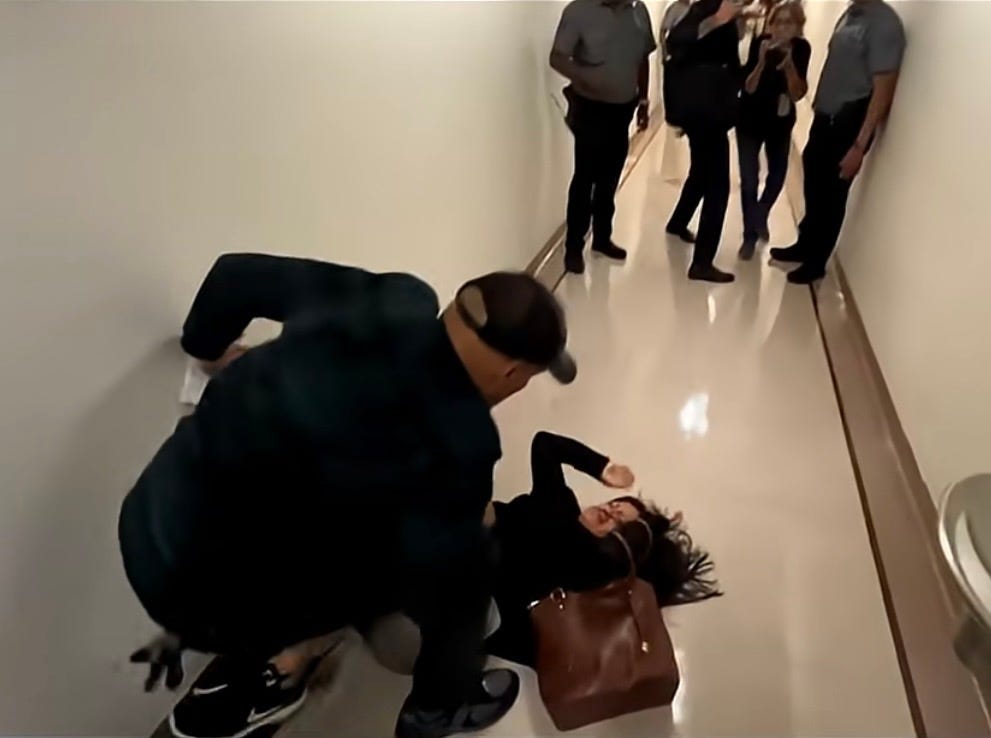
ATLANTA — Cruelty isn’t accidental in American immigration enforcement. It is a feature, not a flaw — a strategic tool deployed to create fear so pervasive that people leave the country on their own.
That is the point.
And in a rare, candid conversation, a former ICE prosecutor laid out how the system is designed to do exactly that.
According to him, the goal is not simply to remove undocumented immigrants, but to cultivate an atmosphere where even those attempting to “do it the right way” are overwhelmed by anxiety and intimidation. A place where the constant threat of surveillance, detention, or a misinterpreted document keeps people so on edge that mistakes become inevitable — and those mistakes become grounds for removal.
“It’s a chilling effect,” he told me. “It’s deliberate. And it works.”
He described officers being strategically placed in non-detained immigration courts specifically to deter attendance — not because those individuals are criminals, but because fear itself is the enforcement mechanism.
In his telling, this is not rogue behavior. It is the system working as intended under the Trump administration’s renewed directives: disrupt routines, inject chaos, and make life so difficult that people self-deport.
Even cases that seem morally obvious — like the hypothetical one he used of an 80-year-old grandmother who raised American children and put them through college — become, in the legal frame he described, black-and-white violations.
“If they crossed illegally they have to go,” he said.
Context doesn’t matter. Contribution doesn’t matter. Family doesn’t matter.
The former prosecutor wasn’t boasting or condemning. He was explaining — providing a window into the internal logic that turns policy into fear and fear into enforcement.
Among the first things he made clear was the distinction ICE attorneys often draw between what the public considers unlawful and what the law itself actually prohibits.
ICE agents wearing masks in apartment complexes and parking lots? In his view: not unlawful.
Agents failing to show warrants, or choosing not to present them even when they have them? Not unlawful.
Agents covering their faces or withholding identifying information? Not unlawful.
“People misunderstand the difference between violating policy and violating law,” he told me. “One is internal procedure. The other is what a court can act on.”
He returned to this point repeatedly, not to justify every action he has seen, but to underscore how officers understand their mandate.
When I pressed him on why ICE agents are appearing masked in public — a shift I’ve seen firsthand — he said officers believe the threat environment has changed.
“DHS employees are absolutely fearful for their life, and that’s why they’re wearing masks ” he said.
Not theoretical fear, but fear of retaliation, doxxing, or targeted harassment, he added.
“I am not the Gestapo,” he said, his tone rising.
When asked if he felt the agents on the immigration forces were being treated worse that the people that are being detained, he paused.
“I believe in a free Republic that law enforcement should be held swiftly and utterly accountable for any mis-actions,” he said.
He noted that masking in the field does not exempt agents from showing their faces in court. But outside the courtroom, he said, many believe the statutes give them wide discretion.
He pointed again to the distinction between criminal and civil enforcement.
“Immigration arrests aren’t criminal. They’re administrative,” he noted.
That legal posture, he argued, creates a different threshold for what officers can do. In his view, the lack of a criminal charge means officers can detain individuals based solely on evidence of unlawful entry, even years after the fact.
He acknowledged that ICE has written policies limiting when agents can obscure their identities, but he described those policies as internal guidance — not legally binding constraints.
“Policies are tools,” he said. “Law is what governs.”
He repeatedly emphasized he is not speaking for ICE and no longer works there. His purpose, he said, was to explain how people inside the system think — not to validate or condemn every decision.
He described himself as Christian and talked about compassion. He told me he believes the vast majority of migrants he encountered were “good people,” while also saying that in his interpretation of the law, entry without inspection still triggers consequences.
“They are people. We should have compassion. We should respect and honor them. We are a nation of all, but what’s happening to them when they come here and they’re promised all these things from separate administrations. One gives them this, another gives them nothing, and honestly we should probably give them somewhere in the middle,” he said. “And I just think it’s the administrations using them as political warfare.”
“The law is the law,” he said, stressing that immigration judges — not prosecutors like him — ultimately decide outcomes.
“Everybody gets a hearing. And whatever that judge decides, that’s the system we have.”
If parts of that system appear harsh or outdated, he said, the responsibility lies with Congress, not frontline agents or attorneys.
“We’re caught between the extremes,” he said. “The people who want to deport everyone and the people who want to abolish enforcement entirely. It leaves very little room for common sense.”
The perspective he offered wasn’t an indictment of every officer or attorney in the system, but a reminder of the machinery they operate inside. A machinery shaped by political directives, legal ambiguities, and a national debate so polarized that fear has become policy.
A system that sees administrative authority as broad.
A system where discretion is expansive, and oversight limited.
Above all, a system that believes it is enforcing the law as written, even when the human cost is catastrophic.


If the local police did was ice does, they would be prosecuted. Throwing non resisting woman and children to the ground and zip tying there hands behind there back, all without a warrant, is assault and should be procecuted under local criminal law. The American people have a moral compass and this is why Trumf has lost so much support
If the law allows for the this cruelty then these need to be changed. These are human beings that ICE is going after. They deserve respect and justice. This is not a third world
country. We should all be appaulled at how these vulnerable people are being treated.