Some Say Chicano. Others Say Pinche Gringo.
A letter to my readers from Mexico City
By Nick Valencia | April 10, 2026
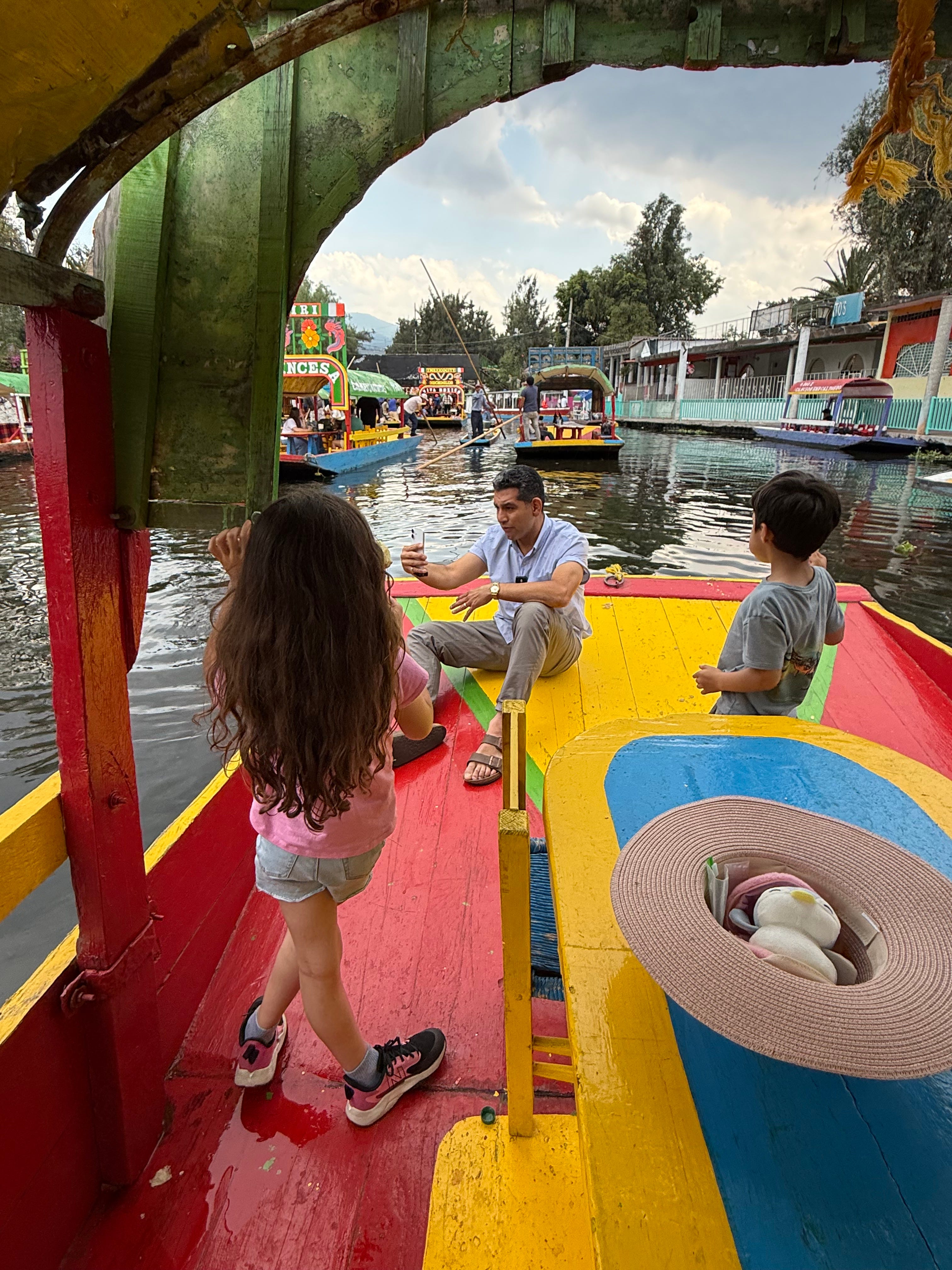
MEXICO CITY— I didn’t expect to feel like this here.
For years, in the U.S. I’ve lived in the in-between and carried the weight of proving I belong. Not White enough to disappear. Not Mexican enough to fully claim something that always felt just out of reach.
That’s the Chicano condition. In the movie Selena, her father who is played by legendary Latino actor Edward James Olmos talked about being a Mexican-American like this:
“We gotta be twice as perfect as anybody else. We gotta prove to the Mexicans how Mexican we are, and we gotta prove to the Americans how American we are. It’s exhausting.”
He’s right, but we learn to live in it. We make something of it. And back home, I have.
I show up in the Northeast LA neighborhoods that raised me. I speak with clarity about our culture, who we are and what we’re up against. I fight for social justice for all backgrounds. I’m proud of all that.
But here, in Mexico City, none of that travels. Here, I’m just another American. Especially in Condesa — what some of my Mexican friends now call “Gringolandia.”
I’m staying in an Airbnb in a neighborhood that used to feel like Mexico and now doesn’t. Cafes with menus in English. Prices that mirror Los Angeles. People talking loudly in American.
But to some, I’m not just another pinche gringo. Like to the servers at the restaurant next door to where we’re staying.
We talk in Spanish and they look at my mixed family lovingly, even as my 5-year-old tries to order in a language that sounds more like some alien dialect than Spanish. It’s cute though, and they see it. They also see the pensive look on my face as I watch every other person who walks by dressed like they just walked out of some upper-middle class suburb in the U.S.
As we watch another group of tourists walk by, the servers tell me business is up. More Americans. More money flowing through the neighborhood. The owners are doing well, but they’re not. Their pay hasn’t changed, even if their workload has — like being forced to speak English.
Later, I talk to the señora who lives next door.
She tells me about all the Airbnbs that have popped up, and how since the pandemic the crowds have been nonstop. Groups coming in and out. Loud. Late. Detached from the place they’re in.
She too looks at my family differently. Not only has she been able to chisme with my mom and aunt, a favorite Latino pastime, she has been able to vent to us in hopes that we might ask the owner of the building to help fix the broken gate caused by all the Airbnb guests before us.
We’re quiet. We speak Spanish, and aside from the kids being kids, she knows that we’re not here to take over the space.
She tells me it’s a relief. A relief. Think about that.
What I’ve always told myself coming back to Mexico was that it’s a return to my homeland, a connection to my ancestry. This trip has been measured on a scale of disruption rather than belonging. I fell on the better side of it, but I’m still on the scale.
For over a decade, I’ve been coming to Mexico City. Sometimes for work. Sometimes for fun. Sometimes as a pilgrimage.
I’ve wanted to live here. Build something here. Be closer to something that always felt like mine. But walking these streets now, I don’t feel closer. I feel exposed. Because for the first time, I’m not navigating identity from below or trying to climb into belonging. I’m looking at it from the other side — from the position of someone who has more, who moves easier, who changes a place just by being in it.
Back home, I fight to prove I belong. Here, I don’t have to. And that’s the problem. The same system that questions me in the United States is the one that benefits me here. That’s not comfortable to sit with, but it’s real.
I’ll leave here crossing the border, understanding something new about myself. At 42. That’s beautiful.
Some say Chicano. Others say pinche gringo. Let them. Se quien soy.


