The Man Who Wouldn’t Decide
By Nick Valencia | March 21, 2026
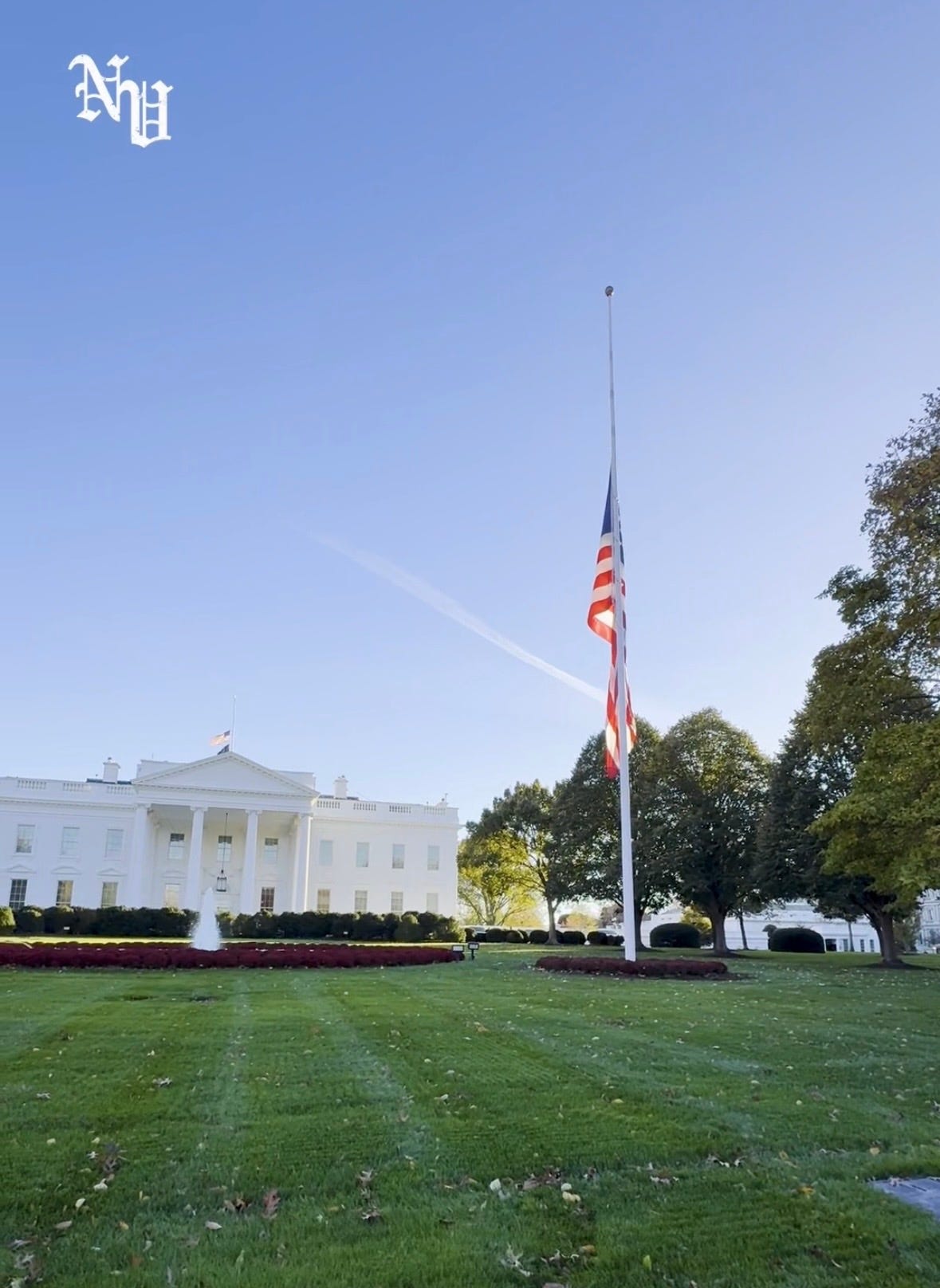
WASHINGTON D.C.— There was a line in the Mueller Report that never landed the way it should have. It didn’t clear the president, but it didn’t accuse him either. Instead, Robert Mueller did something far more unsettling. He stepped back.
“If we had confidence after a thorough investigation of the facts that the president clearly did not commit obstruction of justice, we would so state,” Mr. Mueller’s report said. “Based on the facts and the applicable legal standards, however, we are unable to reach that judgment.”
What Mueller declined to judge, Donald Trump rushed to define. The absence of charges, which were actually rooted in Justice Department policy, not exoneration, was recast by Trump as total vindication.
The whole thing was a hoax, Trump claimed. It was a masterclass in narrative capture. Where Mueller offered nuance, Trump offered certainty. And in the modern media environment, certainty wins. The line Mueller wouldn’t cross became, in Trump’s telling, was proof that there was never a line to begin with. Now Mueller is gone. And with him, so too is a certain kind of American restraint.
For critics, Mueller’s restraint was a failure. A moment that demanded clarity instead delivered ambiguity. A country waiting for answers got a legal brief instead. What’s left is a sort of roadmap without a driver that most Americans have never read and never will.
For Muller’s defenders, his choice was discipline. An understanding that the justice system, as constructed, had limits and that forcing a conclusion beyond those limits could fracture the very institutions he had spent a career trying to protect.
Both versions can be true.
In the immediate aftermath of his death, the tributes came predictably: steady hand, public servant, institutionalist. He led the FBI through the wreckage of 9/11. He was trusted by presidents of both parties. He was, by design, unflashy.
But history will remember him less for what he did and more for what he refused to do. Because the Russia Investigation was never just about Russia: it was about power. About whether the presidency could be examined like any other office or whether it sat just out of reach, protected not by innocence, but by design.
The boundaries Mueller outlined—what a prosecutor can do, what a president can be held accountable for, what institutions are willing to enforce—have all been tested in the years since. Some have bent. Others have broken. And in that sense, his report reads differently now, not as a conclusion, but as a warning.
Robert Mueller showed the country what the law could do. And just as importantly, what it wouldn’t. Mueller believed the system would carry the truth forward.
President Trump understood something else entirely: if no one delivers the final verdict, you get to write it yourself. And for millions of Americans, he did. Including rewriting the legacy of Muller himself whose name now very likely will always be mentioned alongside Trump’s.
Robert Mueller was 81.


He deserves better. He is the true patriot that Trump will never be.
Well sourced and written. Thank you.